 Menu
Menu Location Info
 Contact Us
 Careers
 The Mario’s Difference
 Blog
Blog Reviews
GIVE THE
Gift of Flavor!
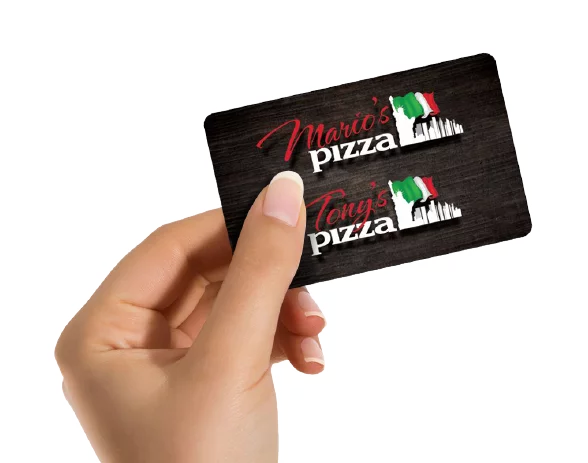
Gift cards are available in any amount in any restaurant or on our app


Prices shown reflect a discounted CASH PAYMENT option. If payment is made via CARD, a 3% processing fee will be added at time of checkout.

View menu and more
Orders placed through Doordash
will not be eligible for loyalty points.
Thank you!
In the Charlotte or Hickory areas? Visit our sister restaurant, Tony’s Pizza!
and we love to share!
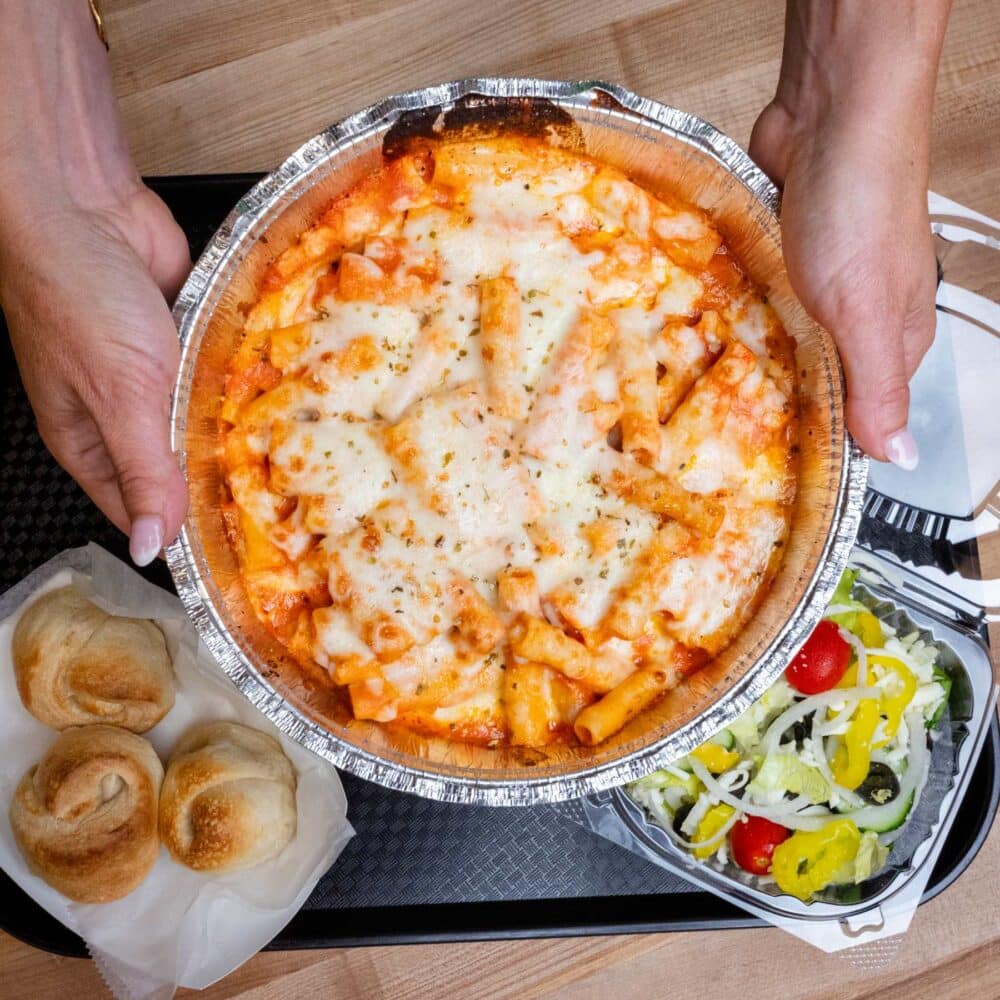
Pasta appears to be such a simple ingredient. It consists of flour, water, and sometimes eggs. Yet, cooking and sauce pairing can mean the difference between a flavorful and balanced dish or a bland one. Of course, Italians have perfected this art of creating flavorful masterpieces. When searching for good pasta places near me, visit Mario’s Pizza.
A staple in Italian cooking, pasta is more than just another ingredient. It’s deeply embedded in their culture with recipes and techniques passed down through the generations.
For example, in southern Italy, residents use water and semolina, made from durum wheat, to make pasta. Semolina has a coarse, rough texture with a yellowish hue, which gives pasta a rustic appearance.
In the north, Italians use a 00 flour, a finely sifted flour made from a softer wheat. In addition to water, residents use eggs to create a richer, more tender pasta. Of course, regional differences exist, with some areas mixing different ratios of both flours and adding olive oil.
A large American supermarket typically carries around 40-50 different pasta shapes. Yet, Italians create over 300 types. With similar basic ingredients, many Americans may wonder why Italians have such an extensive selection.
Actually, Italians have a purpose for each shape – every pasta holds sauces differently. Its structure allows the right amount of sauce to cling to the main ingredient for a balanced bite every time.
For example, thin strands, like spaghetti, work well with light sauces like marinara. Tubular pasta, like penne, can handle a more robust meat sauce with chunks. Of course, Italians also have pasta specific shapes for particular dishes. Lasagna is an example of this.
The heart of great Italian cooking is simplicity and flavor. Typically, each dish consists of fewer than 5 ingredients. With so few ingredients, they must be high-quality, fresh items. To achieve this freshness you can taste, only local ingredients will do.
Brothers Vinny, Tony, and Mario understand this connection intimately. Growing up in a large Italian family in Brooklyn, NY, they learned the techniques to make delicious food. In 1981, the brothers moved to North Carolina to bring their family recipes to the south.
Over the years, we’ve opened new Italian restaurants, making it easy to find a pasta place nearby. Today, you’ll find Mario’s in these neighborhoods:
Moreover, we serve several pasta dishes in our Italian restaurants:
With each generous-sized portion, your meal also comes with a side salad and garlic knots. Your salad choices include:
The variety of shapes and sauce combinations makes pasta an extremely versatile dish. This adaptability and flexibility also mean you can pair it with many different sides. Whether you want to add another flavor or bread to sop up our delicious sauce, Maro’s has plenty to offer:
Do all good pasta places near you offer an extensive and varied menu? Mario’s Pizza does! As our name suggests, our signature dish is NY style pizza. Our pizza is available in several sizes with 32 toppings to personalize your pie.
Additionally, we serve many other favorite Italian dishes:
Are you having trouble recreating your beloved Italian dish at home? Below, we answer a few commonly asked questions about your search for pasta places near you. Of course, you can always stop by your nearest Mario’s Pizza for great tasting food.
Usually, you’ll find cooking instructions on your box of pasta. While the manufacturer’s instructions are helpful, they’re not always accurate for cooking it “al dente”. This term translates “to the tooth” and means firm when bitten, yet cooked through to the core.
Salt is a well-known seasoning to suppress bitterness and amplify flavors. It can also affect the aroma of foods, which in turn enhances the flavor. Salt isn’t an ingredient in pasta. Hence, boiling it in just a pot of water can result in a bland, tasteless dish.
However, adding salt to the boiling water before adding your pasta will season it. As your pasta boils in the salt water, it becomes seasoned evenly from the inside out.
No. Noodles and pasta differ in their ingredients and processing. First, pasta uses few ingredients. While some noodles also use these same substances, they can also include salt, vegetable oils, and baking soda. Furthermore, the flour variations are much greater in noodles. Often, manufacturers use rice, mung bean, buckwheat, or tapioca flours.
Secondly, noodle manufacturers roll dough into a flat sheet before putting it through a cutting machine. While some traditional Italians still make pasta shapes by hand, manufacturers use extruders. Through this process, dies shape the pasta as it passes through.
Of course, we think we do, but more importantly, so do our customers. Many repeatedly return to our restaurants for our delicious food. Therefore, stop searching for good pasta places near me, and stop by Mario’s Pizza!
Gift cards are available in any amount in any restaurant or on our app